HBO’s The Last of Us is shifting its trajectory in a way few saw coming: by bringing on Li Jun Li, known for her gripping performance in The Sinner, to join the cast for Season 3. This casting decision isn’t just a personnel move—it’s a narrative signal. The inclusion of an actress celebrated for psychological depth and emotional volatility suggests the show is preparing to peel back more layers of trauma, identity, and fractured morality in its next chapter.
This isn’t a show that adds characters for spectacle. Every face introduced in The Last of Us universe carries narrative weight, often serving as a mirror to Joel, Ellie, or the world they navigate. Li Jun Li’s arrival is no exception.
Why Li Jun Li’s Casting Matters
Li Jun Li’s breakout role as Detective Kat Velasco in The Sinner positioned her as one of the most compelling dramatic performers of the last decade. Her ability to oscillate between stoic professionalism and deeply personal unraveling made her a standout in a series built on moral ambiguity and hidden trauma.
That skill set aligns perfectly with The Last of Us’ core themes. The show has always been less about the infected and more about what remains of humanity in the aftermath. Li Jun Li doesn’t play characters who survive—she plays those who endure, often at great psychological cost.
Her casting implies a character who won’t just react to the world but challenge it—and potentially the protagonists themselves.
“We’re not looking for heroes. We’re looking for people who have lived through something and can’t go back to who they were.” — Craig Mazin, co-creator of The Last of Us
That quote, spoken during early development interviews, remains the show’s compass. Li Jun Li doesn’t play people who return to normal. She plays people who are irrevocably changed—and that’s exactly the kind of energy Season 3 needs.
The Evolution of Season 3’s Narrative
With Season 2 adapting the emotionally brutal The Last of Us Part II—centered on revenge, grief, and cyclical violence—Season 3 will have to answer a difficult question: what comes after retribution?
The groundwork laid by Season 2 suggests that redemption isn’t clean, forgiveness is rare, and peace isn’t guaranteed. So what terrain remains unexplored? That’s where Li Jun Li likely comes in.
Early reports indicate her character, codenamed “Dr. Lian Zhou” in internal documents, is a virologist with ties to the early days of the Cordyceps outbreak. Unlike previous scientists glimpsed in flashbacks, Zhou is rumored to have made controversial decisions under pressure—not out of malice, but out of a belief that some lives must be sacrificed to save the species.
This isn’t a new trope, but in Li Jun Li’s hands, it won’t feel recycled. Her strength lies in making ethically gray choices feel painfully human. If Zhou is forced to make a call that costs innocent lives, viewers won’t see a villain—they’ll see a woman drowning in consequence.
How Her Role Could Shift the Power Dynamic
Joel and Ellie’s dynamic has always been central, but by Season 3, that relationship may no longer be the show’s only axis. With Joel’s fate sealed by the end of Part II, the story must evolve beyond him.
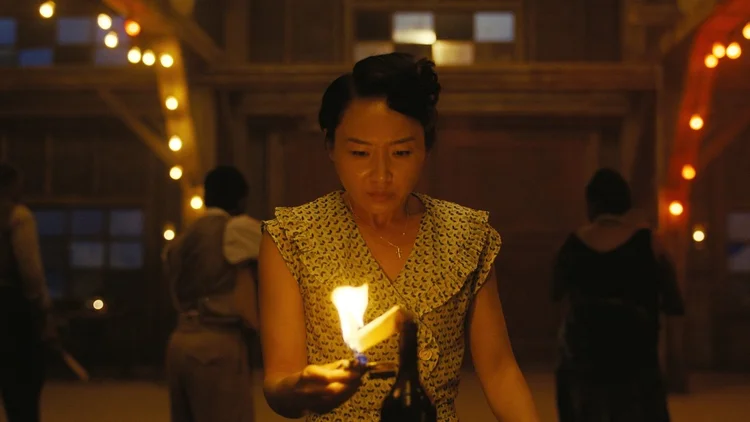
Enter Li Jun Li’s Zhou—a potential mentor, antagonist, or reluctant ally to an Ellie now navigating the world alone.
Imagine this scenario: Ellie, struggling with PTSD and physical deterioration hinted at in the game, seeks answers about the origin of the virus. She tracks down Zhou, the last surviving researcher from a failed quarantine zone. Their interactions become a series of escalating confrontations—not with fists, but with ideology.
- Ellie: “You let them die.”
- Zhou: “I let one die so five hundred could live. You’ve killed dozens for pride. Don’t preach to me about cost.”
This kind of dialogue isn’t just dramatic—it’s thematically essential. It forces the audience to question what survival truly means.
The Sinner’s Influence on The Last of Us’ Casting Strategy
The decision to pull talent from The Sinner isn’t random. That series, like The Last of Us, thrives on moral complexity and psychological realism. Its characters aren’t defined by good or evil but by trauma, choice, and consequence.
By casting Li Jun Li, HBO is importing that same tonal DNA.
It’s worth noting that other Sinner alumni have landed in prestige dramas with similarly introspective themes—Bill Pullman, Carrie Coon, and Jessica Biel all transitioned into complex, layered roles after their turns on the show. Li Jun Li is following that path, but into a world even more unforgiving.
What sets her apart is her restraint. In a genre where intensity often defaults to shouting or violence, Li Jun Li conveys turmoil through silence, hesitation, and controlled delivery. That kind of performance suits The Last of Us, where a single look can carry more weight than a monologue.
Speculation vs. Storytelling: What We Know (and Don’t Know)
Despite the excitement, it’s critical to separate confirmed facts from fan theories.
Confirmed: - Li Jun Li has signed on for a multi-episode arc in Season 3. - She will play a new character, not based directly on a game counterpart. - Filming is scheduled to begin in early 2025 in British Columbia.
Unconfirmed (but widely speculated): - Dr. Zhou may have had a personal connection to Dr. Tommy Miller (Neil Druckmann’s hinted-at expanded role). - Her research could introduce a potential cure subplot. - She may survive into a potential Season 4, suggesting long-term narrative importance.
The show’s creators have been careful not to spoil major plot points, but casting a character with no direct game equivalent is itself significant. It means The Last of Us is no longer just adapting—it’s expanding.
This creative confidence suggests HBO believes the audience is ready for an original chapter in this universe. But it also carries risk. Fans of Part II expect emotional fidelity, not reinvention.
Creative Risks and Fan Expectations
Adding an original character in Season 3 is bold—especially when The Last of Us Part II already has a dense, emotionally charged narrative. Some fans worry that introducing someone like Dr. Zhou could dilute Ellie’s journey or distract from the core themes.
But there’s precedent for this kind of expansion done well.
Consider Better Call Saul. Initially dismissed as a spin-off with limited runway, it evolved into a profound exploration of identity, regret, and consequence—adding original characters like Kim Wexler who became central to the narrative.
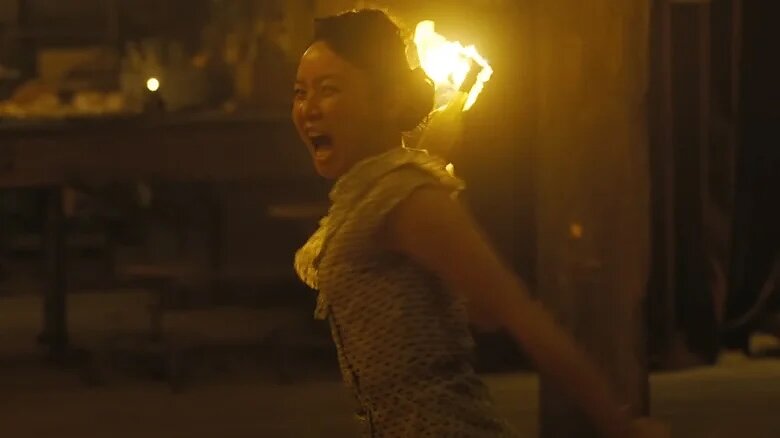
The Last of Us has the same potential. Li Jun Li’s character isn’t replacing Ellie—she could be reflecting her. If Zhou is a version of what Ellie could become—a brilliant mind hardened by impossible choices—their dynamic becomes a cautionary dialogue.
“The most dangerous people in this world aren’t the infected. They’re the ones who think they’re doing the right thing.” — Line reportedly rehearsed by Li Jun Li during early table reads
If that line makes it to air, it could define the season.
Practical Implications for Production and Story Flow
From a production standpoint, Li Jun Li’s casting affects more than just scriptwriting. It reshapes entire arcs.
Her character’s backstory will likely require new flashback sequences, potentially set in a research facility or government lab during the early outbreak. These scenes will need period accuracy, specialized sets, and a visual tone distinct from the post-apocalyptic present.
Additionally, her scientific expertise introduces technical dialogue that must feel authentic without alienating viewers. The writing team may consult real virologists, as they did in Season 1, to ensure medical accuracy.
But the real challenge lies in emotional integration. New characters can’t just appear—they must matter. That means:
- Clear motivation (why is Zhou still alive? What does she want?)
- Narrative consequence (how does her presence change Ellie’s decisions?)
- Thematic relevance (what does she represent in the world’s moral framework?)
Li Jun Li’s casting suggests HBO is investing in all three.
What This Means for the Future of the Series
Season 3 may mark a turning point: the moment The Last of Us stops being a video game adaptation and becomes its own entity.
With original characters, new settings, and expanded timelines, the show is building a universe rather than retelling a story. Li Jun Li isn’t just an actress joining a cast—she’s a symbol of that evolution.
If successful, Season 3 could open the door to spin-offs, prequels, or even standalone seasons exploring other corners of this world. A The Last of Us: Outbreak, focusing on the early days with characters like Zhou, suddenly feels plausible.
But none of that matters if the storytelling falters. The show’s strength has always been emotional truth, not spectacle. Li Jun Li’s performance will be judged not by how many scenes she’s in, but by how deeply she makes us feel.
Final Thoughts: Casting as Storytelling
The decision to cast Li Jun Li in The Last of Us Season 3 isn’t just about star power. It’s a deliberate narrative choice—one that prioritizes psychological depth, moral ambiguity, and the cost of survival.
Her background in The Sinner, a series built on unraveling the human psyche under pressure, makes her uniquely qualified to navigate the emotional terrain of this world.
Season 3 has a lot to live up to. But with Li Jun Li on board, it’s clear the show isn’t playing it safe. And in a genre where predictability is the real infection, that’s the best sign of health.
Actionable takeaway: Follow official HBO channels and the show’s social media for casting updates. Pay attention to makeup and costume reveals—early glimpses of Dr. Zhou’s appearance could signal her timeline and role. For fans, now is the time to revisit The Sinner Season 4 to understand the performance style entering the Last of Us universe.
Frequently Asked Questions
Who is Li Jun Li playing in The Last of Us Season 3? She will play Dr. Lian Zhou, an original character described as a virologist with ties to early Cordyceps research.
Is Dr. Zhou from the video game? No. Dr. Zhou is a new character created for the HBO series and does not appear in The Last of Us Part II.
How many episodes will Li Jun Li appear in? She has signed on for a multi-episode arc, indicating a significant but not necessarily season-long presence.
Why cast someone from The Sinner? The Sinner is known for psychological depth and moral complexity—qualities that align with The Last of Us’ storytelling style.
Could Li Jun Li’s character survive into Season 4? There are indications her role could extend beyond Season 3, depending on audience reception and narrative needs.
Will Dr. Zhou be a villain? Early scripts suggest she’s morally complex—not a villain, but someone capable of making devastating choices for perceived greater good.
When will Season 3 premiere? No official date has been set, but production is expected to begin in 2025, with a likely 2026 release.
FAQ
What should you look for in The Last of Us Casts Li Jun Li from 'The Sinner' for Season 3? Focus on relevance, practical value, and how well the solution matches real user intent.
Is The Last of Us Casts Li Jun Li from 'The Sinner' for Season 3 suitable for beginners? That depends on the workflow, but a clear step-by-step approach usually makes it easier to start.
How do you compare options around The Last of Us Casts Li Jun Li from 'The Sinner' for Season 3? Compare features, trust signals, limitations, pricing, and ease of implementation.
What mistakes should you avoid? Avoid generic choices, weak validation, and decisions based only on marketing claims.
What is the next best step? Shortlist the most relevant options, validate them quickly, and refine from real-world results.