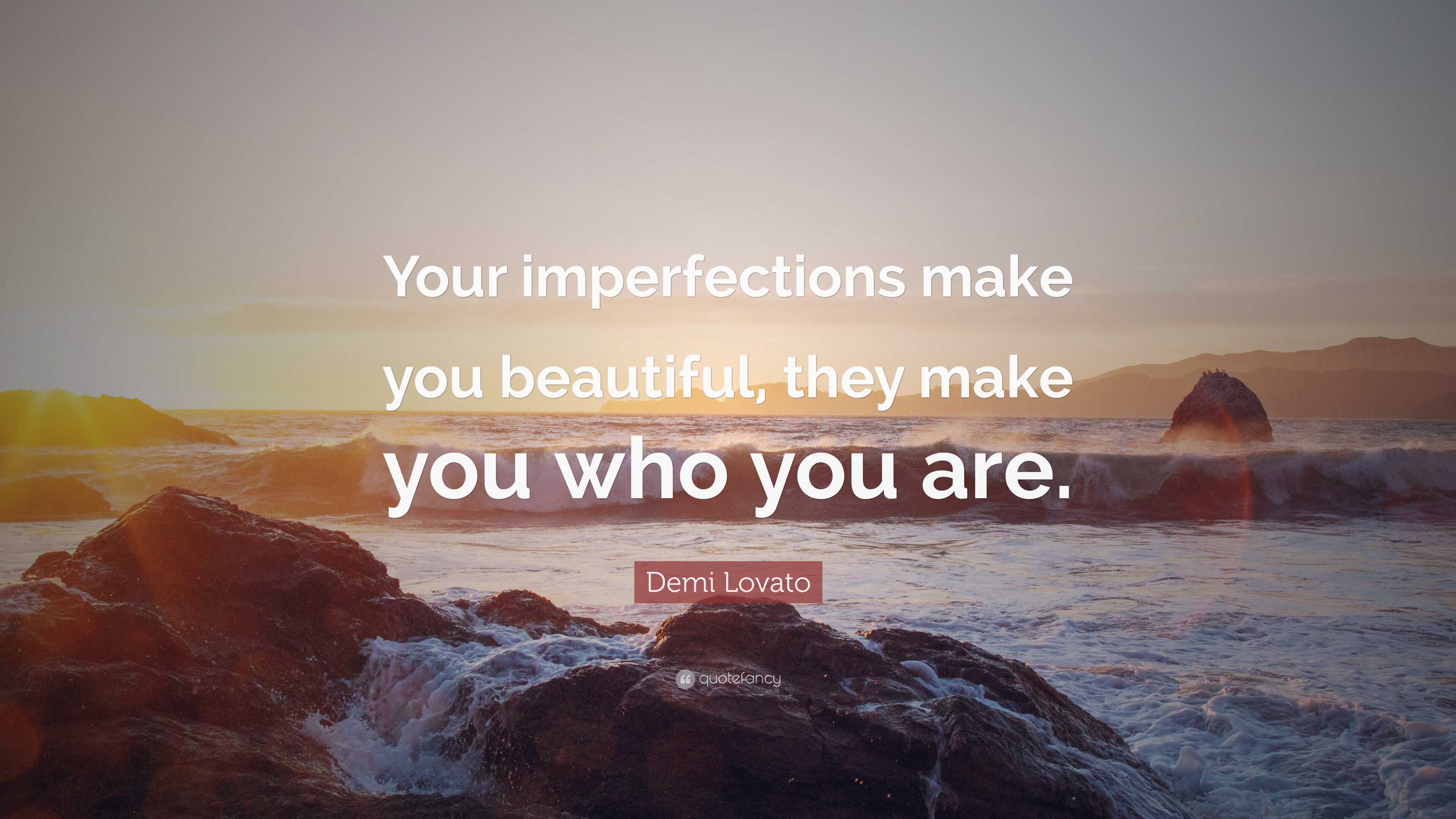
In a world obsessed with filters, flawless images, and curated perfection, one voice stands out for championing the opposite: raw, unfiltered truth. When Demi Lovato says, "Your imperfections make you beautiful. They make you who you are. So just be yourself, love yourself for who you are," they aren’t offering a cliché—they’re issuing a quiet revolution. This isn’t just a feel-good quote of the day. It’s a directive for living with courage, authenticity, and emotional honesty.
Beneath the surface of this message lies a complex web of human experience—struggle, healing, failure, and resilience. Demi’s journey through addiction, identity, mental health crises, and public scrutiny gives this quote weight. It wasn’t born in a studio or scripted for a talk show. It was forged in therapy rooms, relapses, comebacks, and the long, hard road to self-forgiveness. That’s what makes it resonate: it’s earned.
This article unpacks the layers behind Demi Lovato’s philosophy on imperfection, self-love, and personal truth—not as abstract ideas, but as daily practices that shape happiness, define success, and reflect the messy reality of being human.
The Power of Imperfection in a Culture of Perfection
We’re trained from childhood to fix what’s “wrong” with us. Lose weight. Smile more. Work harder. Be smarter. Fit in. The message is clear: you are not enough as you are. Social media amplifies this, turning comparison into a full-time job. But Demi’s quote flips the script: your flaws aren’t liabilities. They’re identifiers. They’re what make your laugh sound like your laugh, your anger uniquely yours, your scars maps of survival.
Example in practice: A woman with alopecia posts a video without a wig, captioning it, “This is me. Not ‘brave,’ not ‘inspiring’—just real.” She’s not trying to inspire. She’s refusing to hide. That’s the energy Demi channels. It’s not about turning pain into performance. It’s about refusing to apologize for existing as you are.
The danger? Misinterpreting this as passive acceptance. Loving your imperfections doesn’t mean ignoring areas for growth. It means approaching them from a place of self-compassion, not self-loathing. There’s a difference between shame (“I’m broken”) and awareness (“I’m learning”).
"Just Be Yourself" — Why It’s Harder Than It Sounds
Demi’s call to “just be yourself” sounds simple. In practice, it’s one of the most radical acts a person can commit.
From adolescence onward, we wear masks: the people-pleaser, the overachiever, the class clown, the strong one. These personas protect us. But over time, they bury the authentic self beneath layers of performance. Many people don’t even know who they are outside of roles—employee, partner, parent, friend.
Common mistake: Confusing self-expression with grand gestures. Being yourself doesn’t require quitting your job or dyeing your hair blue. It shows up in small choices: - Saying “no” when you’re overwhelmed - Admitting you don’t have the answer - Laughing at a joke no one else gets - Wearing what feels good, not what’s trendy
These are the quiet rebellions of authenticity.
Demi’s own evolution—from Disney star to outspoken advocate for LGBTQ+ rights and mental health—mirrors this journey. They didn’t “become” authentic overnight. They unlearned performance. That’s the real work: peeling back what you thought you had to be, to find who you already are.
Loving Yourself Is Not a Feeling—It’s a Practice
One of the most misunderstood parts of the quote is “love yourself.” People hear it and think, I don’t feel loving toward myself—so I’m failing. But self-love isn’t a constant emotional state. It’s a set of behaviors.
Consider this framework: - Self-love = Boundaries, rest, honesty, forgiveness, seeking help - Self-indulgence = Avoidance, numbing, justification, isolation
You can love yourself and still have bad days. You can love yourself and hate how you look in a photo. The key is whether your actions align with care, not whether you feel warm fuzzies.
Realistic use case: After a public mistake—a failed project, a harsh word to a loved one—many spiral into shame. The self-love response? Pause. Acknowledge the impact. Apologize if needed. Then ask: What would I say to a friend in this situation? Extend that same grace to yourself. That’s the practice.
Demi’s openness about their own relapses and therapy journey models this. They don’t pretend everything is fixed. They show up, again and again, choosing self-respect over self-destruction.
Struggle as a Catalyst, Not a Setback
Embedded in Demi’s message is an unspoken truth: imperfection often emerges from struggle. And struggle isn’t the opposite of success—it’s part of it.
Demi’s struggles with eating disorders, substance abuse, and bipolar disorder weren’t detours from their purpose. They became the foundation of it. Their music, advocacy, and public voice carry weight because of what they’ve survived, not in spite of it.
Yet society treats struggle as a sign of weakness. We whisper about mental health. We admire “overnight success” stories while ignoring the years of failure behind them. Demi’s quote subtly challenges this narrative: your pain isn’t disqualifying. It’s data. It’s depth.
- Workflow tip: When facing a setback, ask:
- What did this teach me about my limits?
- How did I respond—and what does that say about my values?
- What part of this will I carry forward?
This turns struggle from a story of failure into one of insight.
Redefining Success on Human Terms
Demi Lovato’s version of success isn’t measured in awards or streams—though they have plenty. It’s measured in freedom. Freedom to change. To speak. To heal. To be seen.
That reframes success as internal, not external. It’s not about reaching a destination. It’s about staying aligned with your truth, even when it costs you something.
Compare this to traditional success models: - Traditional success: Climb the ladder, outperform peers, achieve visibility, maintain image - Human-centered success: Grow consistently, contribute meaningfully, stay authentic, prioritize well-being
The first leads to burnout. The second leads to sustainability.
Demi’s decision to come out as non-binary, to pause tours for mental health, to speak openly about sobriety—it all reflects a success metric rooted in integrity. That’s the deeper lesson in the quote: You don’t have to become someone else to be worthy. You are already enough.
The Link Between Self-Acceptance and Lasting Happiness
Happiness, as Demi implies, isn’t a reward for perfection. It’s a byproduct of alignment.
Studies in positive psychology support this. People who practice self-compassion report higher life satisfaction, lower anxiety, and greater resilience. Why? Because they aren’t constantly at war with themselves.
But there’s a cultural myth that happiness comes from fixing everything first: - Once I lose weight, I’ll be happy - Once I get the promotion, I’ll relax - Once I’m liked by everyone, I’ll feel okay
This creates a moving target. True happiness starts not with achievement, but with acceptance.
Practical example: A man in recovery starts attending support groups. He doesn’t wait until he’s “fixed” to feel worthy of connection. He shows up messy, shares honestly, and slowly rebuilds self-trust. His happiness grows not from perfection, but from presence.
That’s the essence of Demi’s message: stop waiting to begin. Start where you are. Love who you are—now.
How to Apply
This Quote in Daily Life
This isn’t just inspiration for social media captions. It’s a mindset to operationalize.
- Try these actionable steps:
- Replace self-criticism with curiosity. Instead of “I’m such an idiot,” ask, “Why did I react that way?”
- Name one imperfection you’re willing to stop hiding. Maybe it’s your accent, your anxiety, or your need for alone time. Own it.
- Practice radical honesty in small ways. Tell a friend, “I’m actually not okay today.”
- Curate your inputs. Unfollow accounts that make you feel “less than.” Follow voices like Demi’s that normalize struggle.
- Celebrate effort over outcome. Did you try? Did you show up? That’s victory.
These aren’t grand transformations. They’re daily recalibrations toward self-trust.
The beauty of Demi Lovato’s quote lies in its simplicity—and its depth. It’s not a call to complacency. It’s a call to courage. To stop editing yourself into someone palatable. To let your cracks show, because that’s where the light gets in.
In a culture that profits from your insecurity, choosing self-love is revolutionary. And the most powerful statement you can make isn’t perfection—it’s presence. Be here. Be flawed. Be real. That’s where beauty begins.
FAQ
What is Demi Lovato’s most famous quote about self-love? One of their most shared quotes is: “Your imperfections make you beautiful. They make you who you are. So just be yourself, love yourself for who you are.”
Has Demi Lovato spoken about mental health struggles? Yes, extensively. They’ve been open about battling bipolar disorder, addiction, eating disorders, and the importance of therapy and recovery.
How can I start loving myself more? Begin with small acts of self-compassion: set boundaries, speak kindly to yourself, acknowledge your efforts, and seek support when needed.
Does embracing imperfection mean not trying to improve? No. It means pursuing growth from a place of self-respect, not shame. You can accept yourself as you are and strive to evolve.
Why is authenticity important for mental health? Living authentically reduces internal conflict and stress. Hiding your true self leads to burnout and disconnect.
How does Demi Lovato define success? For Demi, success is tied to personal truth, mental well-being, and the freedom to be their authentic self—not just fame or accolades.
Can self-love help with anxiety or depression? While not a cure, self-compassion is a protective factor. It reduces self-criticism, a major contributor to anxiety and depressive thought patterns.
FAQ
What should you look for in Demi Lovato's Quote on Imperfection and Self-Love Explained? Focus on relevance, practical value, and how well the solution matches real user intent.
Is Demi Lovato's Quote on Imperfection and Self-Love Explained suitable for beginners? That depends on the workflow, but a clear step-by-step approach usually makes it easier to start.
How do you compare options around Demi Lovato's Quote on Imperfection and Self-Love Explained? Compare features, trust signals, limitations, pricing, and ease of implementation.
What mistakes should you avoid? Avoid generic choices, weak validation, and decisions based only on marketing claims.
What is the next best step? Shortlist the most relevant options, validate them quickly, and refine from real-world results.